Business Statistic Digital Infographic Charts
Modern Visual Tools for Data Communication
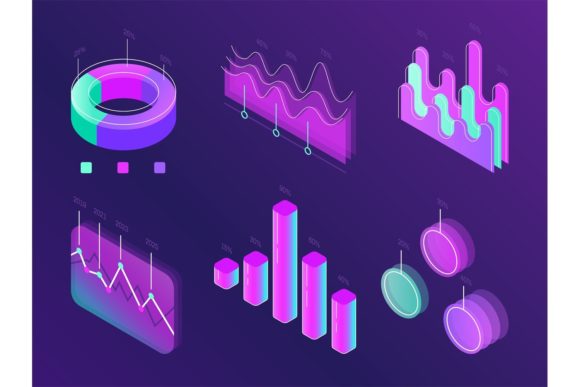
Business Statistic Digital Infographic Charts offer a fresh, engaging way to present complex data in a visually appealing format. These charts combine modern isometric design with vibrant color schemes—like perfection percent cyan and purple—to deliver clarity and impact. Whether you're a marketer, educator, or entrepreneur, these digital infographics help simplify data storytelling for your audience.
What Makes These Infographic Charts Unique
The strength of Business Statistic Digital Infographic Charts lies in their balance of form and function. Unlike flat or traditional bar graphs, these charts use isometric 3D visuals to add depth and dimension. The dark purple background enhances contrast, while the cyan and purple accents highlight key metrics. This visual hierarchy ensures your data doesn’t just inform—it captivates.
Each product file includes a vector EPS10 version for high-quality editing and a JPEG 72ppi preview for quick reference. Designers can easily separate elements using Adobe Illustrator or similar vector editors, making customization straightforward for different projects and platforms.
Applications Across Industries
- Marketing: Use these charts to visually break down campaign performance metrics for internal reports or client presentations.
- Education: Teachers and trainers can integrate these charts into slides or handouts to explain statistical trends in business or economics.
- Entrepreneurship: Startups can leverage these visuals in pitch decks to communicate growth, market share, or revenue projections clearly.
- Content Creation: Bloggers and YouTubers can embed these charts in articles or videos to illustrate business trends in a visually compelling way.
Creative Possibilities and Customization
While the base design is modern and stylized, the real value comes from how you adapt it. With vector editing tools, you can adjust colors, swap out icons, or restructure the layout to match your brand identity or project theme. For example, a tech startup might shift the palette toward neon blues and greys, while a wellness brand might opt for soft greens and warm neutrals.
Consider using the column panel layout to compare quarterly performance across departments or to track progress toward annual goals. You can also animate these charts for digital dashboards or social media posts, bringing your data to life in a way that static visuals can’t match.
Design Tips for Maximum Impact
- Keep it simple: Avoid overcrowding your chart with too many data points. Focus on the most important metrics to maintain clarity.
- Use consistent spacing: Align elements carefully to preserve the clean, modern look of the isometric layout.
- Label thoughtfully: Include clear, concise labels and consider adding a brief legend if multiple color codes are used.
- Test for readability: Preview your chart on different devices to ensure it remains legible on mobile, tablet, and desktop screens.
Adapting for Different Formats and Platforms
These Business Statistic Digital Infographic Charts are versatile enough to be used across a wide range of formats. Here’s how different users can tailor them:
- For Websites: Embed the JPEG preview directly into blog posts or landing pages to enhance SEO and user engagement.
- For Presentations: Import the vector file into PowerPoint or Google Slides to scale without losing quality during live presentations.
- For Social Media: Crop and reframe the chart to fit Instagram carousels, Twitter threads, or LinkedIn posts, each tailored to the platform’s audience expectations.
- For Print: Use the EPS file for printed reports or posters, ensuring high-resolution output for professional results.
Real-World Examples and Use Cases
Imagine a digital marketing agency using these charts to visually represent monthly website traffic growth across different client industries. By customizing the color scheme to match each client’s branding, the agency maintains a cohesive and professional look while clearly showing performance trends.
Alternatively, a small business owner could use the column panel layout to track monthly sales against targets. By updating the chart each month and displaying it on a shared dashboard, the team stays visually engaged with performance goals.
For educators, these charts can be used to demonstrate historical business trends—like the rise of e-commerce over the past decade—in a way that students can easily grasp and retain.
Making Data Accessible and Engaging
One of the most powerful aspects of Business Statistic Digital Infographic Charts is their ability to make data more accessible. Visual learners, in particular, benefit from the combination of structure and color. To ensure your charts are audience-friendly:
- Choose intuitive scales: Make sure your axes are clearly labeled and proportional to the data being shown.
- Include context: Add a brief caption or footnote to explain what the data represents and why it matters.
- Use contrast wisely: Ensure text stands out clearly against the dark purple background by choosing light or neon-toned fonts.
- Stay consistent: If you use multiple charts in a single report or presentation, keep the style, color coding, and layout uniform for a polished look.
Final Thoughts: Creativity Meets Clarity
Business Statistic Digital Infographic Charts are more than just a design asset—they’re a strategic tool for anyone who needs to communicate data effectively. Whether you're presenting to stakeholders, teaching a class, or publishing a report, these charts help you turn numbers into narratives. By combining isometric depth, modern color schemes, and flexible file formats, they offer a versatile solution for a wide range of creative and professional needs.
With a little customization and thoughtful application, you can transform raw statistics into compelling visuals that inform, inspire, and engage your audience—no matter the platform or purpose.