Camping Outdoor Neon: Strategic Design for Impactful Visual Communication
In the realm of digital and print design, visual identity plays a pivotal role in capturing attention, conveying messages, and reinforcing brand presence. The Camping Outdoor Neon collection offers a compelling toolkit for creators, marketers, and entrepreneurs seeking to infuse their projects with a vibrant, retro-inspired aesthetic. More than just a design bundle, it provides a structured visual language that supports strategic communication across multiple platforms—from websites and mobile applications to posters and infographics.
Understanding the Camping Outdoor Neon Bundle
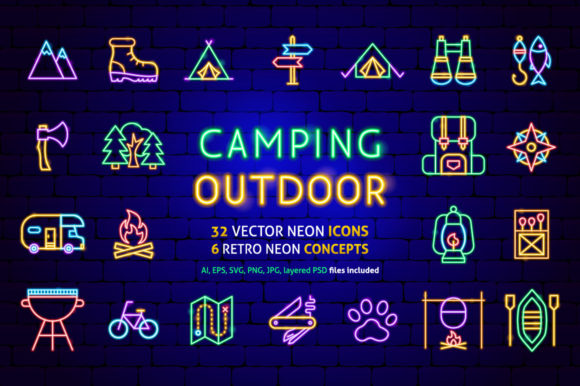
The Camping Outdoor Neon package is a comprehensive set of retro-style glowing electric symbols tailored for modern design needs. It includes:
- 2 sets of 16 Camping Neon Icons
- 2 Camping web banners
- 2 Summer Camp circle concepts
- A Camping Neon labels set
- Camping Neon Text and Outdoor Neon Text
- 32 individual icons
All assets are provided in multiple formats including AI, EPS, SVG, PNG, JPG, and layered PSD files. With scalable vector options and high-resolution raster outputs, this bundle ensures flexibility and quality across design workflows.
Strategic Value of Retro Neon Design
Retro aesthetics have experienced a resurgence not only in fashion and music but also in visual design. The neon glow effect evokes nostalgia while maintaining a modern edge, making it ideal for brands aiming to stand out in a saturated market. When used intentionally, the Camping Outdoor Neon elements can support:
- Brand Positioning: Establish a unique visual identity that resonates with audiences seeking authenticity and creativity.
- Customer Engagement: Enhance user experience through visually striking interfaces and promotional materials.
- Content Differentiation: Make infographics, presentations, and marketing collateral more dynamic and memorable.
When and How to Use Camping Outdoor Neon
While the neon aesthetic is eye-catching, its strategic application is crucial. Consider the following use cases and implementation strategies:
- Branded Web Banners: Use the Camping web banners to create a strong visual hook on landing pages or promotional sites. Align the neon elements with your brand colors for consistency.
- Mobile App Icons: The 512x512px icons are ideal for app development, where clarity and recognizability are key. Ensure the icon design reflects the app's purpose and tone.
- Event Promotion: The Summer Camp circle concepts can be repurposed for festival posters, outdoor event flyers, or themed marketing campaigns.
- Infographics and Presentations: Incorporate the neon text and label sets to highlight key statistics or messages in a visually engaging way.
Planning for Purposeful Design Integration
Before integrating Camping Outdoor Neon into your project, evaluate the following strategic considerations:
- Target Audience: Does the retro neon style align with your audience’s preferences and expectations? It may be more effective for younger demographics or niche markets that appreciate vintage aesthetics.
- Brand Consistency: Ensure that the neon elements complement your existing brand guidelines rather than overshadow them. Use them as accents rather than dominant visuals.
- Platform Requirements: Check the resolution and format compatibility for each intended use. Vector files are ideal for scalability, while layered PSDs allow for detailed customization.
Avoiding Common Pitfalls in Neon Design Use
Despite its visual appeal, using Camping Outdoor Neon without strategic intent can lead to ineffective or even counterproductive outcomes. Common mistakes include:
- Overuse: Applying neon elements across all design components can dilute impact and create visual fatigue.
- Mismatched Messaging: If your brand communicates professionalism or minimalism, neon might clash with the desired tone.
- Unoptimized Formats: Using low-resolution PNGs where vector files are needed can result in poor scalability and quality loss.
To avoid these issues, always begin with a clear design brief that outlines your goals, audience, and intended platforms.
Maximizing Long-Term Value Through Intentional Use
Design assets like Camping Outdoor Neon should be viewed as strategic investments rather than one-off tools. To extract long-term value:
- Create a Design System: Develop reusable templates and guidelines that incorporate the neon elements consistently across campaigns and platforms.
- Test and Iterate: Use A/B testing to evaluate how neon-infused designs perform against more traditional layouts in terms of engagement and conversion.
- Document Usage: Keep a record of which assets work best in different contexts. This helps streamline future design decisions and improves efficiency.
Real-World Applications and Strategic Outcomes
Consider a small business launching a summer camping gear line. By using the Camping Outdoor Neon banners and labels on their e-commerce site, they can create a cohesive and engaging shopping experience that aligns with seasonal themes. Similarly, a content creator designing a YouTube thumbnail or social media post can leverage the neon text to draw attention and reinforce their brand’s personality.
For educators or bloggers creating outdoor-themed infographics, the neon icons can serve as visual anchors that guide the reader’s attention and improve information retention. In each case, the key is to align the design choices with strategic goals—whether it’s increasing conversions, improving engagement, or enhancing brand recall.
Conclusion: Designing with Purpose
The Camping Outdoor Neon bundle is more than a collection of graphics—it’s a strategic design resource that, when used thoughtfully, can elevate your visual communication. Whether you’re a marketer crafting a campaign, a designer building a brand identity, or an entrepreneur launching a product, the neon elements offer a versatile and impactful way to stand out. But like any tool, its effectiveness lies in how intentionally and strategically it’s applied. Start with clear objectives, understand your audience, and let the design serve the message—not the other way around.