Enhancing Visual Communication with Car Service Line Art Icons
Understanding Car Service Line Art Icons and Their Role in Design Workflows
Car Service Line Art Icons offer a streamlined visual language for representing automotive tools, maintenance activities, and service components. These icons, available in both line and solid formats, are designed to integrate seamlessly into a wide range of digital and print media. Whether you're crafting a website interface, preparing a marketing poster, or building an educational infographic, these icons serve as a consistent and scalable visual asset that supports clarity and professionalism.
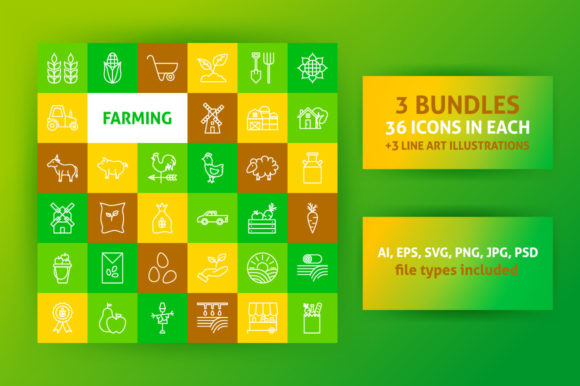
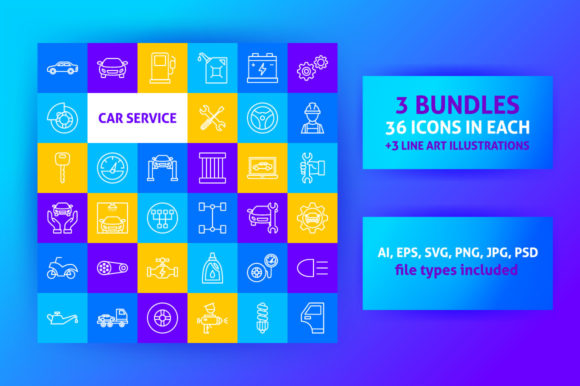
The bundle includes 2 Car Service Line Icon sets over different backgrounds, each containing 36 icons, along with a solid icon set and individual line concepts. This variety ensures flexibility in design applications, from minimalist UI elements to detailed visual explanations in technical documentation.
How Car Service Line Art Icons Fit Into Real-World Projects
Before launching a design or content project, professionals often evaluate visual assets that will enhance user experience and simplify complex ideas. Car Service Line Art Icons are particularly useful in this phase due to their clean, scalable design and compatibility with common design tools. During the planning stage, these icons can be used to draft layouts, visualize workflows, or map out user journeys in automotive-related platforms such as service booking apps or repair guides.
During execution, these icons help maintain visual consistency across web pages, mobile applications, and printed materials. After a project is live, they continue to support usability by reinforcing brand identity and aiding navigation. For example, a car maintenance blog might use these icons to illustrate different service types, making articles more scannable and engaging for readers.
Integration with Other Tools and Platforms
These icons are delivered in multiple formats—AI, EPS, SVG, PNG, JPG, and layered PSD—making them compatible with tools like Adobe Illustrator, Photoshop, Sketch, Figma, and Canva. Their vector nature ensures they scale without loss of quality across devices and resolutions. This adaptability is crucial when working across platforms or when collaborating with teams that use different software ecosystems.
For web developers, SVG files can be embedded directly into HTML or styled with CSS for interactive elements. Designers working on print materials can rely on high-resolution PNG or JPG versions to maintain clarity in posters or brochures. Additionally, the inclusion of both line and solid styles allows for visual hierarchy and thematic flexibility within the same project.
Practical Implementation Tips for Using Car Service Line Art Icons
When integrating these icons into your workflow, start by organizing them in a centralized asset folder. This helps maintain consistency and makes it easier to locate specific icons when needed. If you're using design tools like Figma or Sketch, consider importing the icons into a shared design system or component library for reuse across multiple projects.
- Use consistent sizing: Maintain uniformity by scaling icons to match the visual hierarchy of your layout.
- Match color schemes: The line art icons work well with minimal color palettes, while solid icons can serve as focal points in more vibrant designs.
- Optimize for performance: For web use, compress SVG files where possible and use lazy loading techniques to improve page speed.
For educators or technical writers, these icons can be used to visually represent processes such as oil changes, brake inspections, or engine diagnostics. In marketing materials, they can support calls to action by making service options more visually digestible. Entrepreneurs launching automotive service apps can use them to guide users through booking, scheduling, and status updates.
Ensuring Quality and Long-Term Usability
One of the key advantages of this icon set is its technical quality. All vector paths are closed and expanded, ensuring compatibility across design software and preventing rendering issues. The high-resolution raster files (5000x5000 px) are suitable for large-format printing, while the 512x512 px versions are ideal for digital use. This dual-resolution approach supports both current and future scalability needs.
When using these icons over time, consider versioning your design assets. As your brand or platform evolves, maintaining a consistent icon style ensures continuity. You can also update individual icons without replacing the entire set, which is especially useful in long-term digital products like SaaS dashboards or educational platforms.
Workflow Considerations for Smooth Integration
Efficient use of Car Service Line Art Icons begins with thoughtful planning. Before selecting icons, outline the visual tone of your project. Line icons are ideal for clean, modern interfaces, while solid icons may be better suited for promotional or attention-grabbing contexts. Use them to label buttons, illustrate steps in a process, or enhance data visualization elements like charts and timelines.
For teams working collaboratively, establishing a shared icon naming convention and folder structure can reduce confusion and streamline the design process. When integrating into a CMS or website builder, test icons across multiple devices to ensure responsiveness. If you're developing a mobile app, pair these icons with intuitive gestures or tooltips to enhance accessibility.
Conclusion: A Valuable Asset for Diverse Users
Whether you're a designer, developer, educator, or business owner, Car Service Line Art Icons offer a practical and scalable solution for enhancing visual communication. Their compatibility, clarity, and versatility make them suitable for a wide range of applications—from digital interfaces to printed guides. By incorporating these icons into your workflow thoughtfully, you can improve usability, streamline design processes, and deliver more engaging user experiences across platforms.